Las mejores jugadas también se escriben  Ver más

Enviar a
Provincia de Madrid
0
  • argentina
  • chile
  • colombia
  • españa
  • méxico
  • perú
  • estados unidos
  • internacional

Selecciona tu país

América

Europa

Resto del mundo

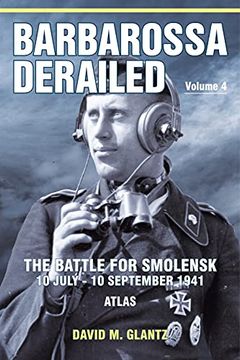
portada Barbarossa Derailed: The Battle for Smolensk 10 July-10 September 1941: Volume 4 - Atlas (en Inglés)
Formato
Libro Físico
Año
2022
Idioma
Inglés
N° páginas
152
Encuadernación
Tapa Blanda
ISBN13
9781915070999

Barbarossa Derailed: The Battle for Smolensk 10 July-10 September 1941: Volume 4 - Atlas (en Inglés)

David M. Glantz (Autor) · Helion & Company · Tapa Blanda

Barbarossa Derailed: The Battle for Smolensk 10 July-10 September 1941: Volume 4 - Atlas (en Inglés) - David M. Glantz

Libro Nuevo Origen: España
Envío: 6 a 8 días háb.
62,44 €59,32 €
-5%
Libro Nuevo

Quedan 6 unidades

59,32 €
Llega entre el 02 Jul y el 08 Jul a Provincia de Madrid. Seleccionar ubicación

Reseña del libro "Barbarossa Derailed: The Battle for Smolensk 10 July-10 September 1941: Volume 4 - Atlas (en Inglés)"

At dawn on 10 July 1941, massed tanks and motorized infantry of German Army Group Center's Second and Third Panzer Groups crossed the Dnepr and Western Dvina Rivers, beginning what Adolf Hitler, the Fuhrer of Germany's Third Reich, and most German officers and soldiers believed would be a triumphal march on Moscow, the capital of the Soviet Union. Less than three weeks before, on 22 June Hitler had unleashed his Wehrmacht's massive invasion of the Soviet Union code-named Operation Barbarossa, which sought to defeat the Soviet Union's Red Army, conquer the country, and unseat its Communist ruler, Josef Stalin. Between 22 June and 10 July, the Wehrmacht advanced up to 500 kilometers into Soviet territory, killed or captured up to one million Red Army soldiers, and reached the western banks of the Western Dvina and Dnepr Rivers, by doing so satisfying the premier assumption of Plan Barbarossa that the Third Reich would emerge victorious if it could defeat and destroy the bulk of the Red Army before it withdrew to safely behind those two rivers. With the Red Army now shattered, Hitler and most Germans expected total victory in a matter of weeks. The ensuing battles in the Smolensk region frustrated German hopes for quick victory. Once across the Dvina and Dnepr Rivers, a surprised Wehrmacht encountered five fresh Soviet armies. Despite destroying two of these armies outright, severely damaging two others, and encircling the remnants of three of these armies in the Smolensk region, quick victory eluded the Germans. Instead, Soviet forces encircled in Mogilev and Smolensk stubbornly refused to surrender, and while they fought on, during July, August, and into early September, first five and then a total of seven newly-mobilized Soviet armies struck back viciously at the advancing Germans, conducting multiple counterattacks and counterstrokes, capped by two major counteroffensives that sapped German strength and will. Despite immense losses in men and materiel, these desperate Soviet actions derailed Operation Barbarossa. Smarting from countless wounds inflicted on his vaunted Wehrmacht, even before the fighting ended in the Smolensk region, Hitler postponed his march on Moscow and instead turned his forces southward to engage 'softer targets' in the Kiev region. The 'derailment' of the Wehrmacht at Smolensk ultimately became the crucial turning point in Operation Barbarossa. Serving as both a companion to the previous three text volumes in this monumental study, and as a standalone battlefield atlas, this volume provides over one hundred specially-commissioned color maps that trace the course of the campaign, each accompanied by a detailed caption.
David M. Glantz
  (Autor)
Ver Página del Autor
David M. Glantz es un historiador y militar norteamericano nacido en 1942 en Port Chester (Nueva York). En 1963, tras cursar estudios en el Instituto Militar de Virginia y en la Universidad de Carolina del Norte en Chapel Hill ingresó en el Ejército de EEUU sirviendo en el cuerpo de artillería en la “plantación” de Long Binh, Vietnam. Estudió para convertirse en Soviet foreign area specialist y sirvió en el USAREUR (United States Army Europe) en la sección de inteligencia. Fue Director of Soviet Army Operations en Fort Leawenworth y en 1993 se retiró del Ejército y fundó The Journal of Slavic Military Studies, publicación de la que es actualmente editor jefe.

Su interés por su objeto de estudio comenzó precisamente siendo Director de Investigación para esta publicación en 1979 y desde su primer proyecto sobre la campaña de Lorena del Tercer Ejército del general Patton, pasando por investigaciones sobre Manchuria y operaciones aerotransportadas soviéticas, David M. Glantz se ha convertido en el mayor experto occidental en la operativa del Ejército Rojo durante la Gran Guerra Patriótica.

Es conocido por sus numerosos libros del Ejército Rojo durante la Segunda Guerra Mundial. En sus propias palabras reconoce haber tenido como principal influencia a su profesor John Erickson, antiguo director de la Escuela de Estudios Eslavos de la Universidad de Edimburgo y especialista, a su vez, en estudios militares soviéticos. Entre sus obras destacan La batalla por Leningrado, la Tetralogía sobre Stalingrado (cuyo primer volumen, A las puertas de Stalingrado, vio la luz en 2017, el segundo, Armagedón en Stalingrado, en 2019 y el tercero, Desenlace en Stalingrado I. Operación Urano en 2022), o Choque de titanes. Según David M. Glantz, esta última obra fue un intento por reproducir la obra de otro de sus grandes inspiradores, Malcolm Macintosh, esta vez junto a Jonathan House, profesor de historia militar.

Sus estudios han desmitificado la imagen de incompetencia del Ejército Soviético durante la Operación Barbarroja, siendo el hilo conductor de todas sus obras cómo este ejército se transformó desde aquella fuerza descrita como torpe por fuentes alemanas hasta el fino instrumento de combate de Manchuria. Actualmente, David M. Glantz es miembro de la Academia de Ciencias Naturales de la Federación Rusa y sus prolíficas obras han comenzado a ser traducidas al español. En 2020 le fue concedido el prestigioso premio Pritzker Military Museum & Library Literature Award for Lifetime Achievement in Military Writing.
Ver más
Ver menos

Opiniones del libro

Preguntas frecuentes sobre el libro

Todos los libros de nuestro catálogo son Originales.
El libro está escrito en Inglés.
La encuadernación de esta edición es Tapa Blanda.

Preguntas y respuestas sobre el libro

¿Tienes una pregunta sobre el libro? Inicia sesión para poder agregar tu propia pregunta.

Opiniones sobre Buscalibre

Ver más opiniones de clientes