Envío a 1€ a Península  Ver más

Enviar a
Provincia de Madrid
0
  • argentina
  • chile
  • colombia
  • españa
  • méxico
  • perú
  • estados unidos
  • internacional

Selecciona tu país

América

Europa

Resto del mundo

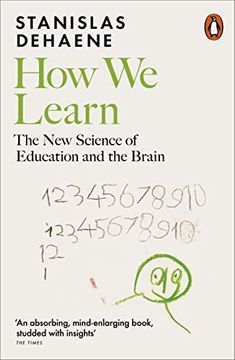
portada How we Learn: The new Science of Education and the Brain (en Inglés)
Formato
Libro Físico
Editorial
Año
2021
Idioma
Inglés
N° páginas
352
Encuadernación
Tapa Blanda
ISBN13
9780141989303

How we Learn: The new Science of Education and the Brain (en Inglés)

Stanislas Dehaene (Autor) · Penguin · Tapa Blanda

How we Learn: The new Science of Education and the Brain (en Inglés) - Stanislas Dehaene

Libro Nuevo Origen: España
Envío: 5 a 7 días háb.
13,74 €13,05 €
-5%
Libro Nuevo

Quedan 85 unidades

13,05 €
Recíbelo el Miércoles 15 de Abril
Más Info

Reseña del libro "How we Learn: The new Science of Education and the Brain (en Inglés)"

'Absorbing, mind-enlarging, studded with insights ... This could have significant real-world results' Sunday TimesHumanity's greatest feat is our incredible ability to learn. Even in their first year, infants acquire language, visual and social knowledge at a rate that surpasses the best supercomputers. But how, exactly, do our brains learn?In How We Learn, leading neuroscientist Stanislas Dehaene delves into the psychological, neuronal, synaptic and molecular mechanisms of learning. Drawing on case studies of children who learned despite huge difficulty and trauma, he explains why youth is such a sensitive period, during which brain plasticity is maximal, but also assures us that our abilities continue into adulthood. We can all enhance our learning and memory at any age and 'learn to learn' by taking maximal advantage of the four pillars of the brain's learning algorithm: attention, active engagement, error feedback and consolidation.The human brain is an extraordinary machine. Its ability to process information and adapt to circumstances by reprogramming itself is unparalleled, and it remains the best source of inspiration for recent developments in artificial intelligence. How We Learn finds the boundary of computer science, neurobiology, cognitive psychology and education to explain how learning really works and how to make the best use of the brain's learning algorithms - and even improve them - in our schools and universities as well as in everyday life.
Stanislas Dehaene
  (Autor)
Ver Página del Autor
Stanislas Dehaene (Roubaix, Francia, 12 de mayo de 1965) es un neurocientífico cognitivo de renombre internacional, reconocido por sus investigaciones sobre la cognición numérica, las bases neuronales de la lectura y los correlatos neuronales de la conciencia. Desde 2017, ocupa la cátedra de Psicología Cognitiva Experimental en el Collège de France y, desde 1989, dirige la Unidad INSERM 562 de Neuroimagen Cognitiva .

Dehaene obtuvo su licenciatura en matemáticas en la École Normale Supérieure de París y completó su doctorado en Psicología Experimental en 1989 bajo la dirección de Jacques Mehler. Su obra más influyente, La Bosse des maths (1997), popularizó el concepto de "sentido numérico", una capacidad innata para comprender los números y las relaciones aritméticas .

A lo largo de su carrera, ha recibido numerosos reconocimientos, como la Beca del Centenario de la Fundación James S. McDonnell en 1999, el Gran Premio Científico de la Fundación Louis D. del Institut de France en 2003 y el Premio "Brain" en 2014 .

Además de su labor investigadora, Dehaene ha sido editor asociado de la revista Cognition y miembro del consejo editorial de varias publicaciones científicas. Su trabajo ha tenido un impacto significativo en la comprensión de los procesos mentales humanos y continúa siendo una referencia en el campo de la neurociencia cognitiva.
Ver más
Ver menos

Opiniones del libro

Preguntas frecuentes sobre el libro

Todos los libros de nuestro catálogo son Originales.
El libro está escrito en Inglés.
La encuadernación de esta edición es Tapa Blanda.

Preguntas y respuestas sobre el libro

¿Tienes una pregunta sobre el libro? Inicia sesión para poder agregar tu propia pregunta.

Opiniones sobre Buscalibre

Ver más opiniones de clientes