Las mejores jugadas también se escriben  Ver más

Enviar a
Provincia de Madrid
0
  • argentina
  • chile
  • colombia
  • españa
  • méxico
  • perú
  • estados unidos
  • internacional

Selecciona tu país

América

Europa

Resto del mundo

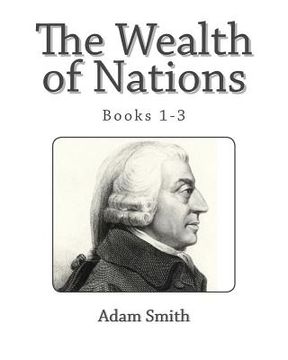
portada The Wealth of Nations (Books 1-3) (en Inglés)
Formato
Libro Físico
Editorial
Idioma
Inglés
N° páginas
188
Encuadernación
Tapa Blanda
Dimensiones
25.4 x 20.3 x 1.0 cm
Peso
0.39 kg.
ISBN13
9781494844684
Categorías

The Wealth of Nations (Books 1-3) (en Inglés)

Adam Smith (Autor) · Createspace · Tapa Blanda

The Wealth of Nations (Books 1-3) (en Inglés) - Adam Smith

Libro Nuevo Importado
Envío: 16 a 21 días háb.
22,10 €21,00 €
-5%
Libro Nuevo

Quedan 100 unidades

21,00 €
Llega entre el 20 Jul y el 29 Jul a Provincia de Madrid. Seleccionar ubicación

Reseña del libro "The Wealth of Nations (Books 1-3) (en Inglés)"

The Wealth of Nations is a book that every thinking person should have on their shelf. Though some rough spots in Adam's thinking have emerged over time, his classic book still provides the logic on which capitalism rests its bones. Not until Marx did someone really challenge its dictates --- Smith basically won the argument on most points. But willingness for those with an inability to think critically, to use this book as justification for the domination of the weak by the strong, has little to do with Smith --- it has everything to do with those who are looking for justification of greed. The Wealth of Nations presents the economic underpinnings of capitalism in a concrete way. Filled with ideas, this economic classic is often convincing, sometimes outdated, and frequently fundamental to belief in free-markets. Smith's ideas are combined with appealing (or appalling) examples of the injustice done to people by disturbing the free-market. Essentially, The Wealth of Nations is a treatise on the power of individuals to maximize their own wealth which manages (rather ably) to support the natural liberty of men while arguing for free markets. Smith doesn't argue for free markets as a perfect system in which there will be no misery. Rather, he shows that economic freedom is the system that gives individuals the greatest (and most just) opportunity to gain happiness and which will be the quickest to respond to changes in supply and demand. The Wealth of Nations doesn't support or suggest the "goodness" of goodness of companies and business as a whole, as it is in the interest of companies to create a supply shortage so they can ask prices above cost. Instead, Smith suggests that the free market is the best way to break the price-setting power that otherwise might be wielded. The Wealth of Nations also reveals that political decisions that at fist glance seems compassionate, might in fact be inhumane, cruel and the cause of much suffering (because on the long run they lead to a supply shortage). The examples given here, are still relevant to view the decisions made by politicians in today's so-called free market countries. Books I-III of the Wealth of Nations examines the 'division of labor' as the key to economic growth, by ensuring the interdependence of individuals within society. They also cover the origins of money, the importance of wages, profit, rent and stocks. Smith's work laid the foundations of economic theory in general and 'classical' economics in particular, but the real sophistication of his analysis derives from the fact that it also encompasses a combination of ethics, philosophy and history to create a vast panorama of society.
Adam Smith
  (Autor)
Ver Página del Autor
Adam Smith (1723-1790) fue un economista y filósofo escocés, considerado el padre de la economía moderna. Su obra se enmarca dentro del ensayo y la filosofía económica, destacando su análisis sobre el libre mercado y la división del trabajo. Estudió en la Universidad de Glasgow y en Oxford, desarrollando ideas que influirían en el liberalismo económico.

Entre sus principales obras se encuentra Una investigación sobre la naturaleza y causas de la riqueza de las naciones (1776), conocida como La riqueza de las naciones, un tratado fundamental en la economía clásica. También escribió Teoría de los sentimientos morales (1759), donde explora la ética y la simpatía humana. Su legado sigue siendo fundamental en el pensamiento económico y político actual.
Ver más
Ver menos

Opiniones del libro

Preguntas frecuentes sobre el libro

Todos los libros de nuestro catálogo son Originales.
El libro está escrito en Inglés.
La encuadernación de esta edición es Tapa Blanda.

Preguntas y respuestas sobre el libro

¿Tienes una pregunta sobre el libro? Inicia sesión para poder agregar tu propia pregunta.

Opiniones sobre Buscalibre

Ver más opiniones de clientes