Este verano, una historia te está esperando  Ver más

Enviar a
Provincia de Madrid
0
  • argentina
  • chile
  • colombia
  • españa
  • méxico
  • perú
  • estados unidos
  • internacional

Selecciona tu país

América

Europa

Resto del mundo

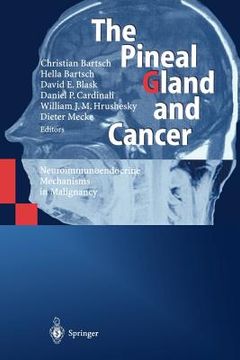
portada the pineal gland and cancer: neuroimmunoendocrine mechanisms in malignancy (en Inglés)
Formato
Libro Físico
Editorial
Año
2011
Idioma
Inglés
N° páginas
578
Encuadernación
Tapa Blanda
Dimensiones
23.4 x 15.6 x 3.1 cm
Peso
0.84 kg.
ISBN
3642640036
ISBN13
9783642640032

the pineal gland and cancer: neuroimmunoendocrine mechanisms in malignancy (en Inglés)

C. Bartsch (Ilustrado por) · H. Bartsch (Ilustrado por) · D. E. Blask (Ilustrado por) · Springer · Tapa Blanda

the pineal gland and cancer: neuroimmunoendocrine mechanisms in malignancy (en Inglés) - Bartsch, C. ; Bartsch, H. ; Blask, D. E.

Libro Nuevo Origen: España
Envío: 6 a 7 días háb.
132,39 €125,77 €
-5%
Libro Nuevo

Quedan 50 unidades

125,77 €
Llega entre el 21 Jul y el 24 Jul a Provincia de Madrid. Seleccionar ubicación

Reseña del libro "the pineal gland and cancer: neuroimmunoendocrine mechanisms in malignancy (en Inglés)"

Three years ago, most authors contributing to this book gathered at the Heinrich Fabri Institute of the University of Tübingen at Blaubeuren near Ulm in Germany for the third conference on "Pineal Gland and Cancer". In 1987, the late Derek Gupta organized the second meeting and published the first book on the topic, 10 years after Vera Lapin, as part of the 25th anniversary celebrations of the Vienna Cancer Research Institute, had held the first meeting. It was in Vienna during the 1930s and 1940s that W. Bergmann and P. Engel demonstrated that pineal extracts possess growth inhibitory properties on experimental rodent tumors and R. Hofstätter reported favorable results when these extracts were given to cancer patients. In the 1970s, Vera Lapin and others reported that surgical removal of the pineal gland (pinealectomy) stimulates experimental tumor growth rendering fundamental support for an involvement of the pineal gland in malignancy. A focal question of past and present research in this field is whether the pineal gland exerts its tumor inhibitory activity primarily or exclusively via melatonin. Currently, it appears that the action of melatonin on experimental tumor growth criti- cally depends on the circadian timing of its administration as weH as on the type and stage of cancer, and that primarily highly differentiated tumor ceHs are controHed. Initial clinical applications of the pineal hormone for incurable cancers raise hopes for a promising future use, particularly when combined with other therapies (e. g.

Opiniones del libro

Preguntas frecuentes sobre el libro

Todos los libros de nuestro catálogo son Originales.
El libro está escrito en Inglés.
La encuadernación de esta edición es Tapa Blanda.

Preguntas y respuestas sobre el libro

¿Tienes una pregunta sobre el libro? Inicia sesión para poder agregar tu propia pregunta.

Opiniones sobre Buscalibre

Ver más opiniones de clientes